
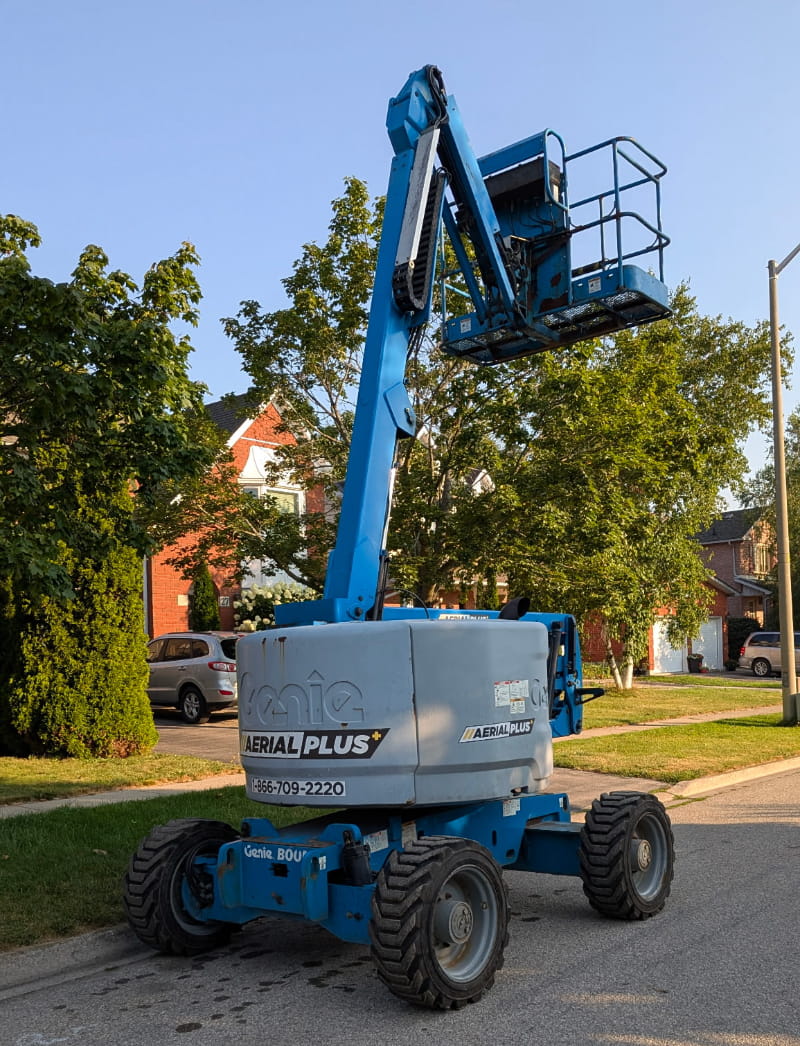
Aerial Lift Rental Guide for Ontario Construction Sites+
9 min read206 views
 Aerial lifts are common on Ontario construction sites because they give workers safer access to elevated work areas. They’re used for exterior repairs, roofing support, steel work, electrical work, and a whole array of projects including general building maintenance.
Aerial lifts improve productivity but using the wrong lift can create serious hazards.
Before renting aerial lift equipment you need to review the site conditions, the work height, surface, load, training needs and fall protection requirements.
This guide covers the main points that site managers and contractors should consider before renting an aerial lift in Ontario. You can view our Aerial Lift Safety Guide (PDF) for a quick overview.
What Each Lift is Used For
The first step is to match the machine to the task.
Scissor lifts
Scissor lifts move vertically. They’re a good choice when workers need a stable platform and direct vertical access above the base of the machine.
Scissor lifts are commonly used in jobs for:
- Basic indoor construction
- Electrical work
- Ceiling work
- Mechanical installation
- Warehouse maintenance
- Exterior work on firm, level surfaces
Electric scissor lifts are generally used for indoor projects because they are quieter and they don’t produce exhaust like fuel-powered machines.
Rough terrain scissor lifts are better suited for outdoor construction sites where the ground is uneven but they still need stable surface conditions.
Boom lifts
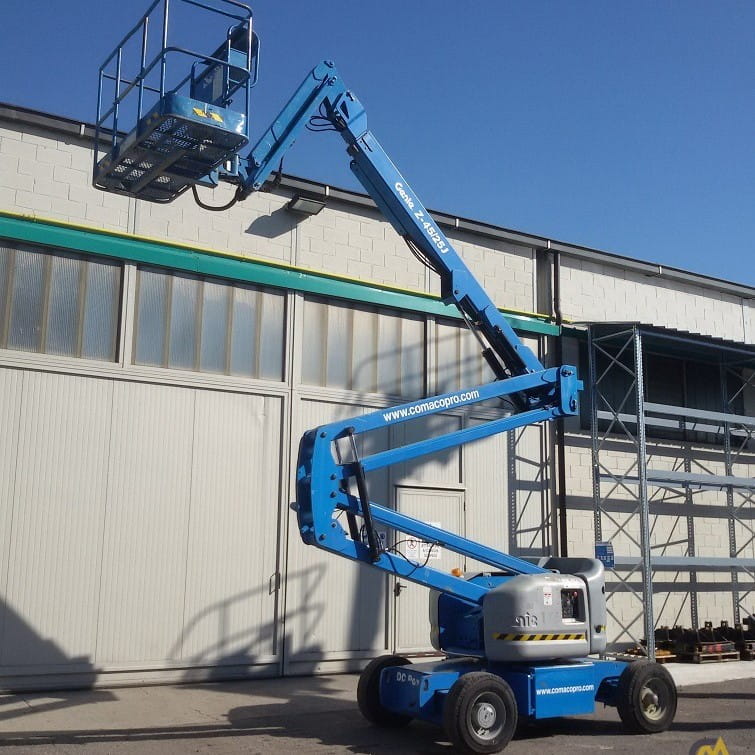 Boom lifts are perfect for jobs where you need height and outreach. They’re useful when the work area cannot be reached from directly below the lift.
Boom lifts are commonly used in jobs for:
- Exterior building work
- Steel and structural work
- Roofline access
- Sign installation
- Tree-adjacent work
- Areas blocked by obstacles
Basically, you’ll need an articulating boom when the work involves needing to reach up and over any obstacles below.
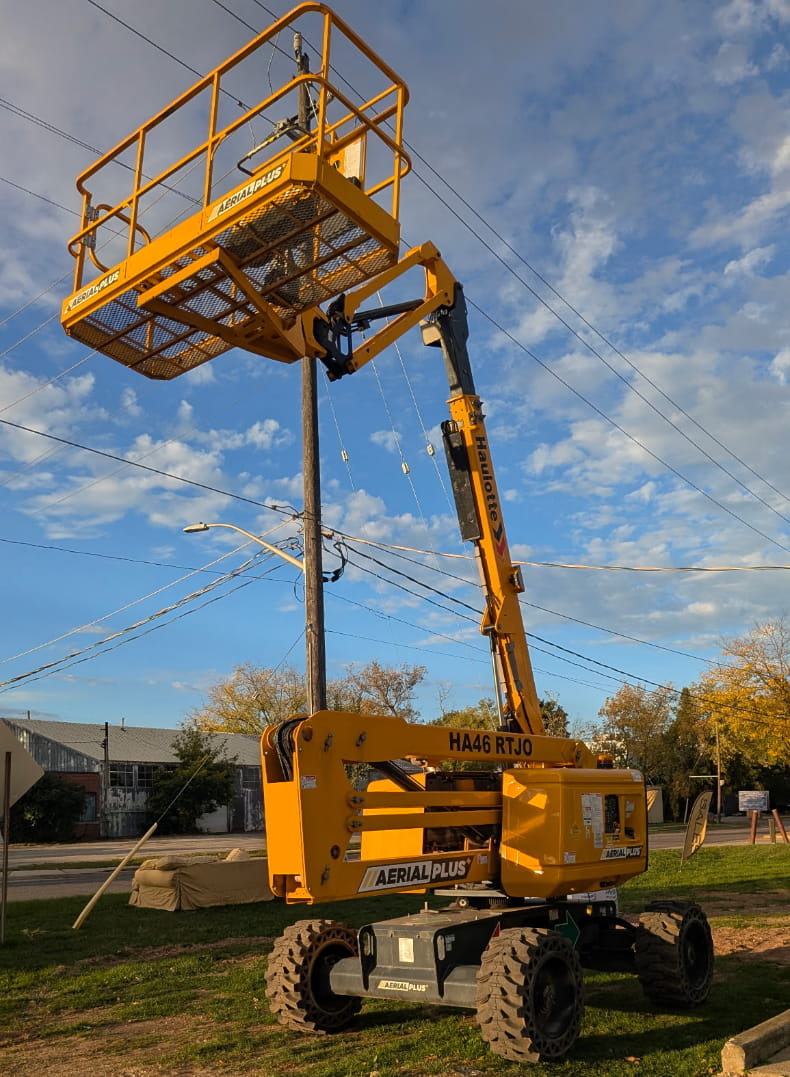
Telescopic boom lifts are useful when straight horizontal reach is needed. A regular boom lift is usually an articulating boom that bends at joints to reach up and over obstacles, but a telescopic boom lift has a straight extendable arm for longer horizontal reach.
Vertical mast lifts
You would use a compact vertical mast lift in tight work areas requiring low load-capacity and less platform space than a scissor lift. They’re used when indoor space is limited.
They are commonly used in jobs for:
- Facility maintenance
- Ceiling access
- Lighting work
- Indoor repairs at height
- Small commercial projects
Vertical mast lifts are not a replacement for larger lifts like boom or scissor lifts, but they’re useful when the work area is tight and the height requirement is lower.
Telehandlers
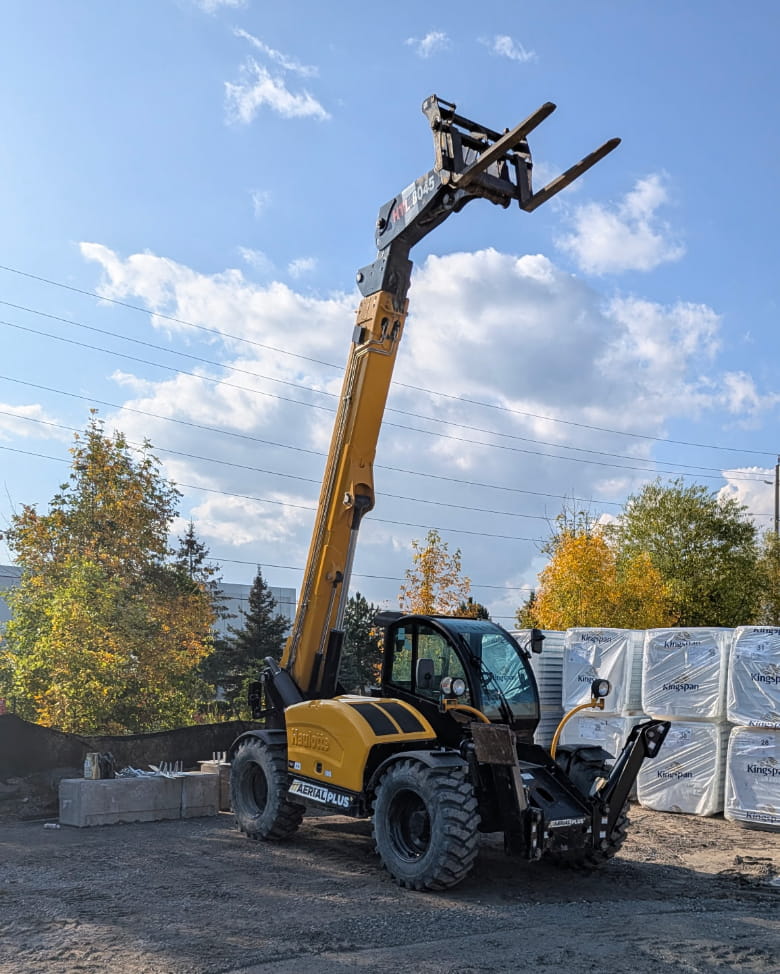 A telehandler is not the same as a scissor lift, boom lift or vertical mast lift but are mainly used for lifting, moving, and placing materials around a construction site.
The main purpose of a telehandler is material handling instead of providing a raised work platform for workers.
If the main job is to lift materials instead of people, a telehandler is the proper choice because it’s built to move, raise and place loads where other lifts are only designed to position workers safely at height.
They’re especially useful on outdoor job sites because they’re built for rougher ground conditions but they still need a stable surface and should only be operated by trained workers.
Telehandlers are generally used in job like:
- Moving pallets
- Lifting construction materials
- Loading and unloading deliveries
- Placing materials at height
- Moving supplies across rough terrain
- Supporting masonry, framing, roofing and general construction work
A telehandler can reach forward and upward, which makes it useful on construction sites where materials need to be placed on upper levels, across uneven ground or over obstacles.
How to Choose the Right Aerial Lift
Electric vs Rough Terrain Equipment
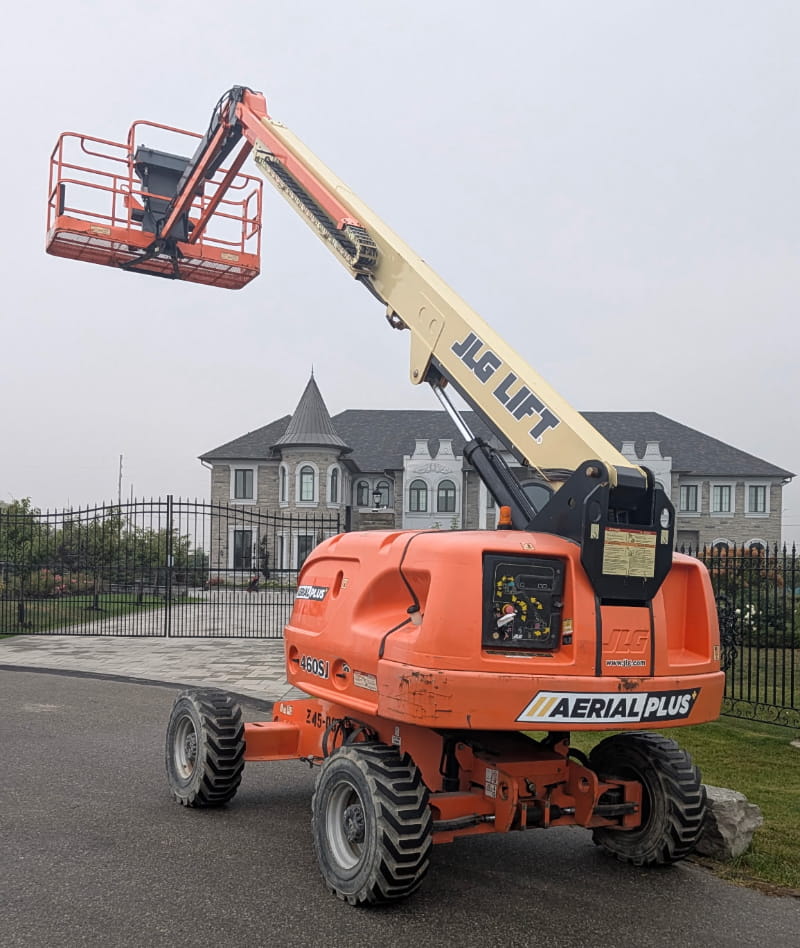 Electric lifts are usually better for indoor work on finished surfaces in warehouses and other areas where emissions could be a concern. They’re compact and easier to use in closed and controlled environments.
Rough terrain lifts are better for outdoor construction type job sites where the work area is larger and the surface area could be less finished. They’re built for tougher conditions but they still need proper ground assessment, setup, and operation.
The phrase “rough terrain” does not mean the machine can be used anywhere. Mud, slopes, soft soil, holes, debris, and unstable ground all are dangerous conditions and can still make operation unsafe.
Check the job site before choosing the lift
The job site should be reviewed before the rental is booked because a lift that works properly on one site may not be safe or practical on another.
Important site conditions include:
- Ground firmness
- Slope
- Access width
- Turning space
- Overhead wires
- Ceiling height
- Door openings
- Obstacles
- Traffic from vehicles or equipment
- Wind exposure
- Indoor or outdoor use
Note that soft ground, slopes, debris, open excavations, curbs, and floor openings can all create risk.
A lift must be used according to the manufacturer’s instructions and within the limits shown on the machine. If the site is outdoors, weather should also be considered because wind, rain, snow, ice and poor visibility can all affect safe operation.
Confirm the required working height and reach
Working height is one of the most common rental mistakes. The platform height and the working height are not the same thing.
Platform height is the height of the platform floor while working height includes the worker’s reach from the platform.
For example, a lift with a 26-foot platform height may have an approximate working height of 32 feet depending on the machine and the worker’s position. These heights should always be confirmed with the lift provider and the machine’s specifications.
Check the load requirements
Every aerial lift has a rated working load. That load limit includes the workers, tools, materials and anything else placed on the platform. Add it the load before the job starts and do not guess it.
Common load items to calculate include:
- Workers
- Tool bags
- Power tools
- Fasteners
- Buckets
- Small materials
- Safety gear
- Extension cords
- Job-specific equipment
The machine should never be loaded beyond its rated capacity, and overloading a lift can affect stability and create a dangerous tipping hazard.
Confirm training before the lift arrives
In Ontario, workers must be competent to operate the equipment they are using. They need basic instruction and training for the class of elevating work platform being operated.
Training should include the manufacturer’s instructions, load limits, safe use of the controls, and awareness of the surface conditions the machine is designed for. Controls and operating limits can vary by machine so hands-on instruction is also important too.
Each lift has different limits and operating considerations. so supervisors should not assume that a worker can safely operate one just because they’ve previously used a different type.
Review fall protection requirements
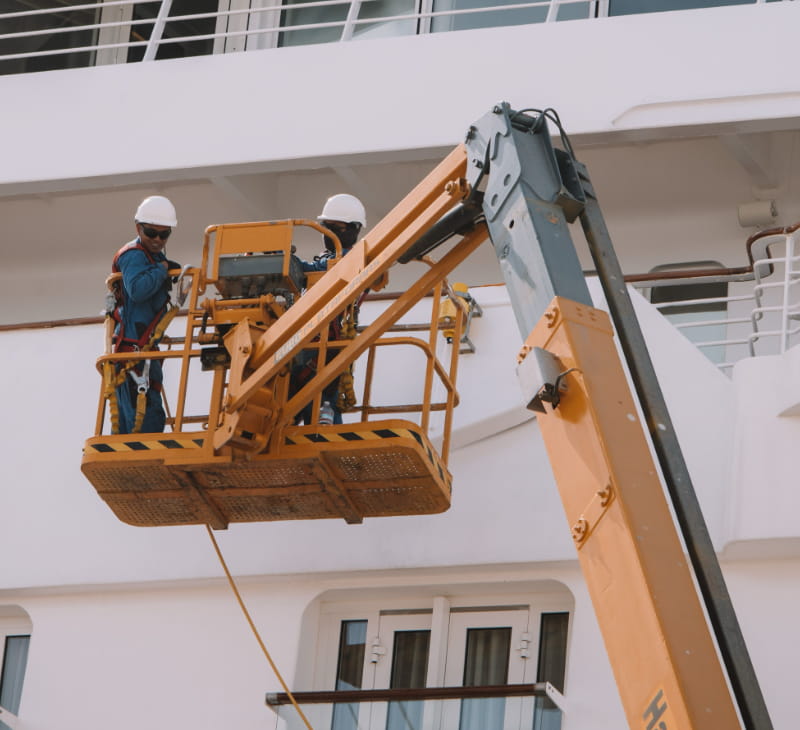 Fall protection is a major issue with aerial lift use.
Workers on boom-type elevating platforms and vehicle-mounted aerial devices generally need to be attached to an adequate anchorage point on the platform by an appropriate method of fall protection.
Workers also need to follow a site’s fall protection plan and the manufacturer’s instructions for that machine.
Working-at-heights training may also be required on Ontario construction projects where workers use specified fall protection systems. This is separate from aerial lift operator training.
Rule of thumbs: do not let anyone operate or work from the lift until the training, fall protection and site requirements have been confirmed.
Inspect the lift before use
Inspections are how problems are caught before the machine is elevated. A lift should be inspected before use each day.
A pre-use inspection should include:
- Tires or tracks
- Wheels
- Controls
- Emergency stop
- Guardrails
- Gate or entry chain
- Platform condition
- Hydraulic leaks
- Battery or fuel system
- Warning lights and alarms
- Decals and load rating
- Fall protection anchor points
- Outriggers or stabilizers if equipped
The operator’s manual should be available with the machine but if it’s missing the lift should not be treated as ready for use.
Any defect should be immediately reported and a damaged or questionable machine should be taken out of service until it is inspected and serviced.
Plan the Delivery of the Lift
Delivery can affect the project schedule so before booking a rental, confirm where the lift will be unloaded and how it will reach the work area.
Check:
- Gate width
- Driveway access
- Loading area
- Overhead wires
- Ground conditions near the drop-off point
- Turning room
- Indoor floor load limits
- Parking restrictions
- Site contact for delivery
Make sure the rental provider sufficiently understands the site before the machine is dispatched.
Be Aware of Overhead Power Lines
Before the job starts, it is absolutely important to identify all overhead electrical hazards. Power lines are one of the most serious hazards related to aerial lift work. A boom, platform, worker, tool or any other materials can contact a line and cause a serious accident.
Make sure to keep the lift, workers and materials at a safe distance from sources of power and if the work is near power lines, the construction worker or employer should make sure the proper controls are in place before the lift is used.
Working near power lines is not an area for guesswork. If there is any uncertainty at all, stop the job and get proper direction before the work continues. Always remember Safety First.
Before Renting Ask the Right Questions
Before ordering an aerial lift, have the following basic information ready.
Useful questions include:
- What height does the crew need to reach?
- Is horizontal outreach needed?
- Is the work indoors or outdoors?
- What is the ground surface?
- Are there slopes or soft areas?
- Are there overhead wires?
- How many workers will be on the platform?
- What tools and materials will be used?
- Is the operator trained for this class of equipment?
- Is fall protection available and suitable?
- Is there enough access for delivery?
- How long will the equipment be needed?
Good rental planning reduces downtime and helps avoid the delays of having the wrong machine delivered.
Final rental checklist
An aerial lift is only safe and useful when the equipment is selected properly. This checklist should be taken seriously because mistakes with height, load, ground conditions and training can put workers at serious risk before the job begins.
 Before using an aerial lift on an Ontario construction site, confirm the following:
- The lift matches the required height and reach.
- The lift is suitable for the ground and site conditions.
- The rated working load is enough for workers, tools, and materials.
- Workers are trained and competent to operate the equipment.
- Fall protection requirements have been reviewed.
- The machine has been inspected before use.
- The operator’s manual is with the machine.
- Overhead hazards have been identified.
- Delivery and site access have been planned.
- The work is being done according to the manufacturer’s instructions and the site safety plan.
An aerial lift will only useful when the equipment is selected properly and used safely, and the safest job starts before the lift even arrives on site.
If you live in Southern Ontario and have questions about which lift is right for your site, contact Aerial Plus today, and we’ll help you through the process and get you safely working at heights.