
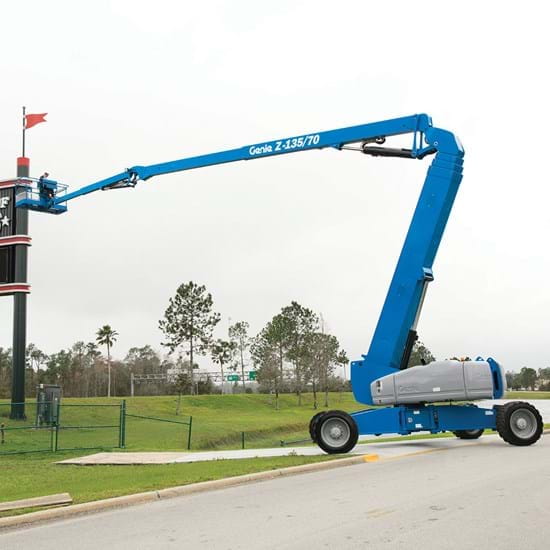
Assessing Ground Conditions Before Setting Up a Boom Lift+
4 min read170 views
If you’re considering renting a boom lift for a job, you need to assess the ground conditions before you use it.
 A boom lift can weigh several tonnes and even though the ground may look solid from the cab, it may not actually be stable enough once the boom is elevated and extended.
If you assess the surface before delivery, it helps prevent tipping hazards and avoidable project delays. It can also help your boom lift rental provider recommend a more suitable boom lift specifically built for the conditions at your worksite.
How to Assess Ground Conditions Before Setting Up a Boom Lift
Firm and Level Ground Are Separate Requirements
Never judge the surface by appearance alone. A surface can be firm without being level. A paved parking lot may easily support the machine but it could have a drainage slope that could cause issues. Dry soil may also appear level but not be solid enough to support heavy loads.
First check the operating manual for the allowable slope and setup requirements for the specific machine. Take note that travel gradeability (the steepest slope a lift can safely climb) is not to be confused with the slope on which the boom can safely raise. Be careful because a lift may be capable of travelling across a grade but it may be unsafe to elevate or extend the platform.
Also, don’t rely on tilt alarm instead of checking the surface, but if it activates, follow the manufacturer’s instructions for lowering and repositioning the machine.
Look for Hidden Ground Hazards
Before positioning and using the boom lift, the setup area needs to be inspected for conditions that could affect the safe usage of the machine. Look for conditions that could make the boom suddenly shift, collapse or cause the machine to sink.
When setting up a boom, the most important hazards to look for are:
- Recently backfilled trenches or excavations.
- Catch basins and utility access covers.
- Underground tanks or service vaults.
- Cracked pavement or deteriorated concrete.
- Soft shoulders beside roads or parking areas.
- Frozen ground that may thaw during the job.
- Saturated soil or standing water after heavy rain.
- Loose gravel, sand or un-compacted construction material.
- Slopes, embankments or drop-offs near the setup area.
Take these precautions seriously. For instance Ontario has issued a specific safety alert concerning utility service covers. Some covers can support ordinary traffic but lack the strength to support the heavy loads created by some mobile elevating work platforms.
Check for Moisture and Potentially Changing Weather
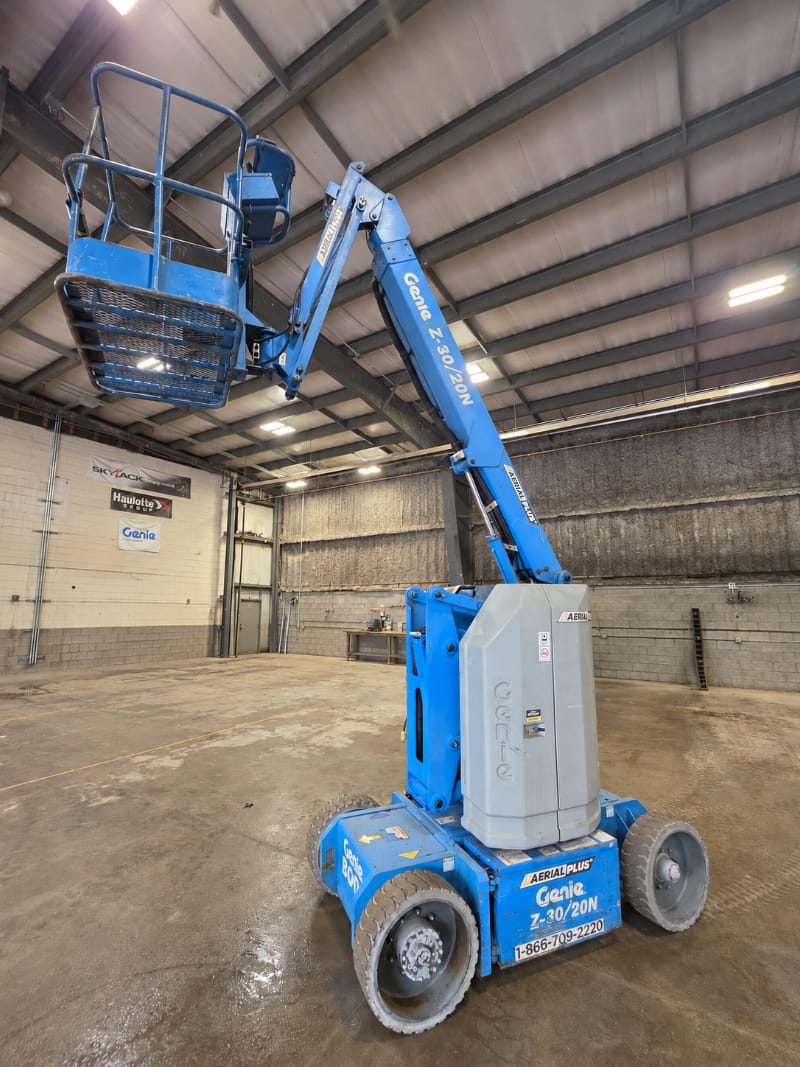 Before positioning the lift, you have to check if it recently rained or snowed or if wet weather is on the horizon.
Be very careful here too. Rain can weaken the soil that was suitable at the time the equipment arrived; snow can conceal potholes or soft ground; and ice can reduce traction even if the surface under it is firm and solid.
Ground conditions should be reassessed when:
- Rain falls during the project.
- Frozen soil begins to thaw.
- Water collects near the setup area.
- The machine begins leaving deep impressions.
- Outrigger pads shift or settle.
- Cracks or depressions appear around the tires or outriggers.
Do not use the lift if it’s no longer level. Just move it. It’s easier to move it than recover it after it’s sunk into the ground or tipped over.
Inspect the Travel Route and the Setup Area
A proper working position is important but the lift must also be able to reach that position safely.
Before the machine is delivered, walk the route and check the width and height of entrances and the height of overhead clearances.
Take note of curbs, openings in the floor or surfaces that may not support the lift.
For indoor projects you may need to obtain confirmation that the floors and ramps can carry the machine’s weight, so make sure to determine their load capacities before the boom lift is delivered.
Use Outrigger Pads and Ground Mats Where Required
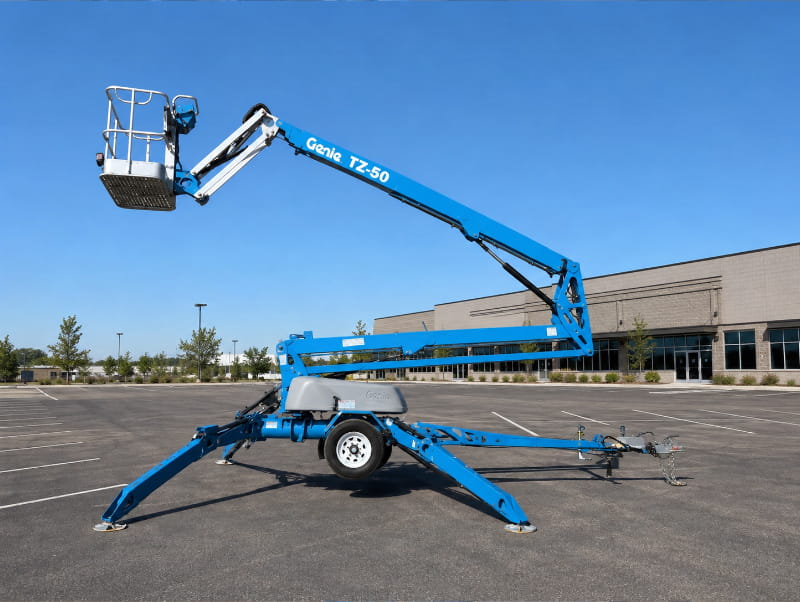 Some boom lifts use outriggers to stabilize the machine before the platform is raised. Each outrigger is placed on a properly sized pad or ground mat and over firm, level ground.
Pads and mats are used to spread the load to reduce sinking but be cautious because they do not make unstable soil safe, and damaged or weak lumber can split under heavy pressure.
Avoid Excavations and Unsupported Edges
Be extra cautious when setting up the boom around trenches, excavations or embankments because they could collapse under the weight of a boom lift.
Even though the surface may look solid, the soil underneath these areas can potentially lack support so it’s best to keep the machine a safe distance from excavations and other drop-offs.
The required distance will depend on the depth of the excavation, soil stability and recent weather but if the edge appear cracked or disturbed, do not position the lift nearby.