
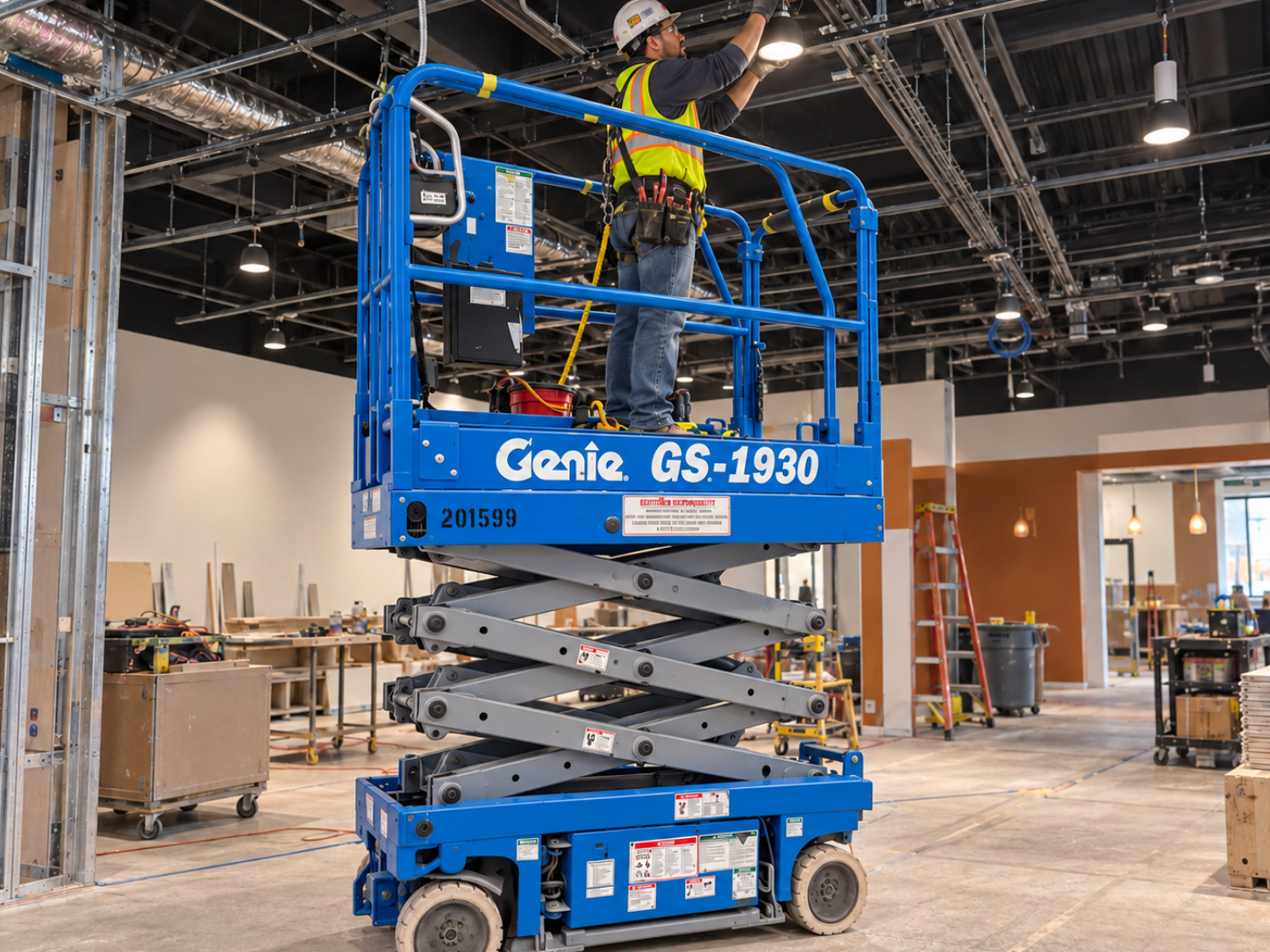
How To Measure Site Access Before Renting Aerial Lift Equipment+
5 min read3 views
The Right Lift Is Useless If It Cannot Reach the Work Area
 If you’re renting an aerial lift for working at heights, the first thing you need to consider is if the machine can pass through the gate, doorways and hallways between the delivery point and to the work space itself.
If the width of a lift is too wide or high by just an inch, it can delay the job, so measuring the access route first helps the rental company recommend the right sized equipment without becoming an expensive obstacle on your job site.
What to Measure Before Renting an Aerial Lift
The following points will help ensure you rent or purchase an aerial lift that will fill properly into all the spaces your facility requires it.
Start With the Lift’s Unloading Area
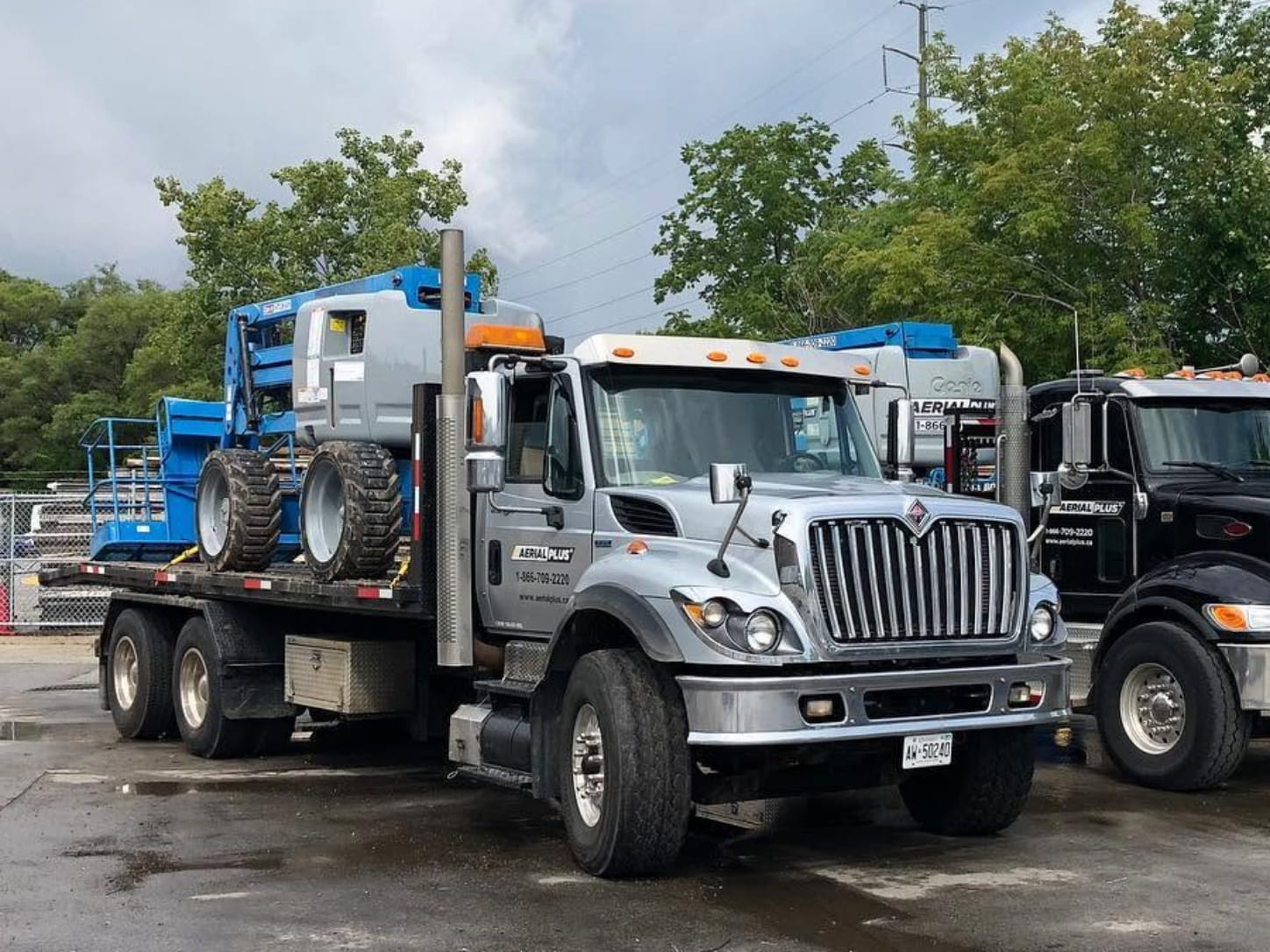
First begin measuring where the rental company will unload the equipment. Delivery trucks will need sufficient room to enter, turn and unload the lift without blocking traffic or encountering overhead hazards.
You should also confirm the site address, entrance and designated unloading location before delivery and if the property has several gates or buildings, provide clear directions and arrange for someone familiar with the site to meet the driver.
A little planning here can prevent the lift from being unloaded on the wrong side of a large property.
Measure Every Doorway and Gate
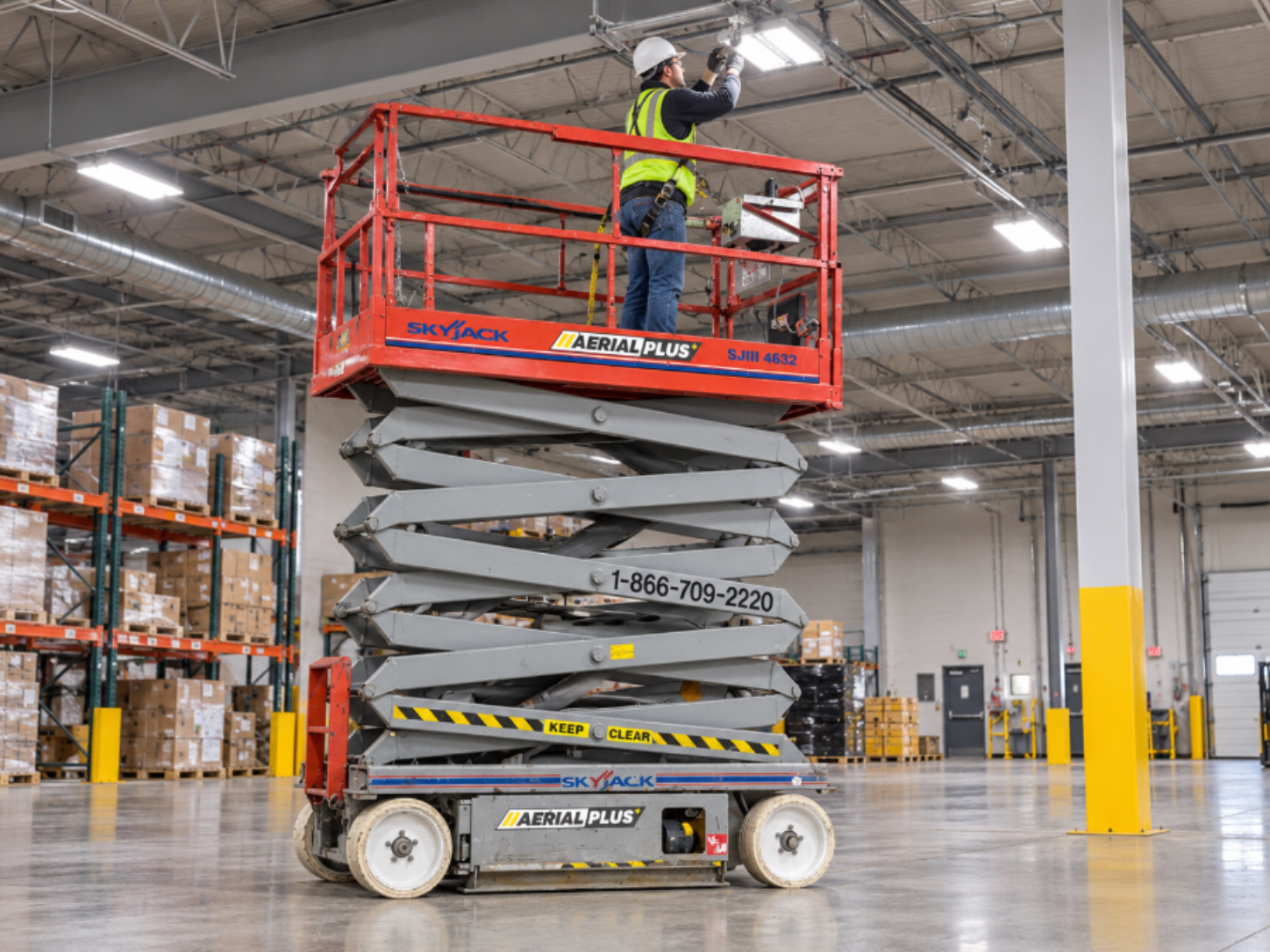 Measure the clear width and height of every opening along the access route to the job site(s). Be careful because the doors may be smaller than the full dimensions of machine because of it’s hinges, handles and protective posts that may extend into the available space.
Also, measure between the narrowest fixed points of the doorways rather only than from one side of the door frame to the other. For double doors, confirm the height and whether both doors can be opened, and whether there’s a centre post that remains in place. If there’s a central post, see if it can be temporarily removed.
Exterior gates should also be checked for chains and latches that reduce clearance.
Compare all these measurements with the machine’s maximum width and stowed (stowed means when it’s not extended) height.
If the work space requires a stable platform with room for workers and tools, a compact scissor lift rental may fit the route because wider platforms and rough-terrain models require considerably more access space.
Follow the Entire Route to the Work Area
Getting through the first doorway doesn’t guarantee that the lift can reach its final position. Before booking the rental, walk the full route and look for narrow openings to measure like low ceilings and areas where construction materials have reduced the available space.
Pay particular attention to:
- Hallway width.
- Low pipes, lights, signs and sprinkler equipment.
- Temporary walls and construction barriers.
- Floor drains, thresholds and raised transitions.
- Loading docks, ramps and changes in elevation.
- Areas occupied by shelving, machinery or stored materials.
After measuring, record the smallest measurement found anywhere along the route because any restrictions may determine which machine can be used.
Allow Enough Room to Turn the Machine
It’s important to also measure the hallway width on both sides of each turn and note the distance between the corner and the next obstruction. Once these measurements are determines, jot them down and give them to the rental company so they can determine whether the lift can actually take the route. You can also send them photos of the path which are useful when columns, counters or other permanently installed equipment make the layout difficult to describe.
This is important because a lift may be able to fit through a hallway but still be unable to turn into the next room.
Check the Stowed Height, Not Just the Platform Height
The platform height tells you how high the lift can raise a worker but the stowed height tells you whether the lowered machine can pass under a doorway, ceiling or overhead obstruction like hanging lights and hallway signage.
You should never assume a railing or other component can be lowered or removed. Instead just confirm the machine’s transport configuration and follow the manufacturer’s procedure. Look for such obstacles like door closers and exit signs above an entrance which can (and usually do) reduces the clearance path unexpectedly.
Consider a Vertical Lift for Confined Indoor Access
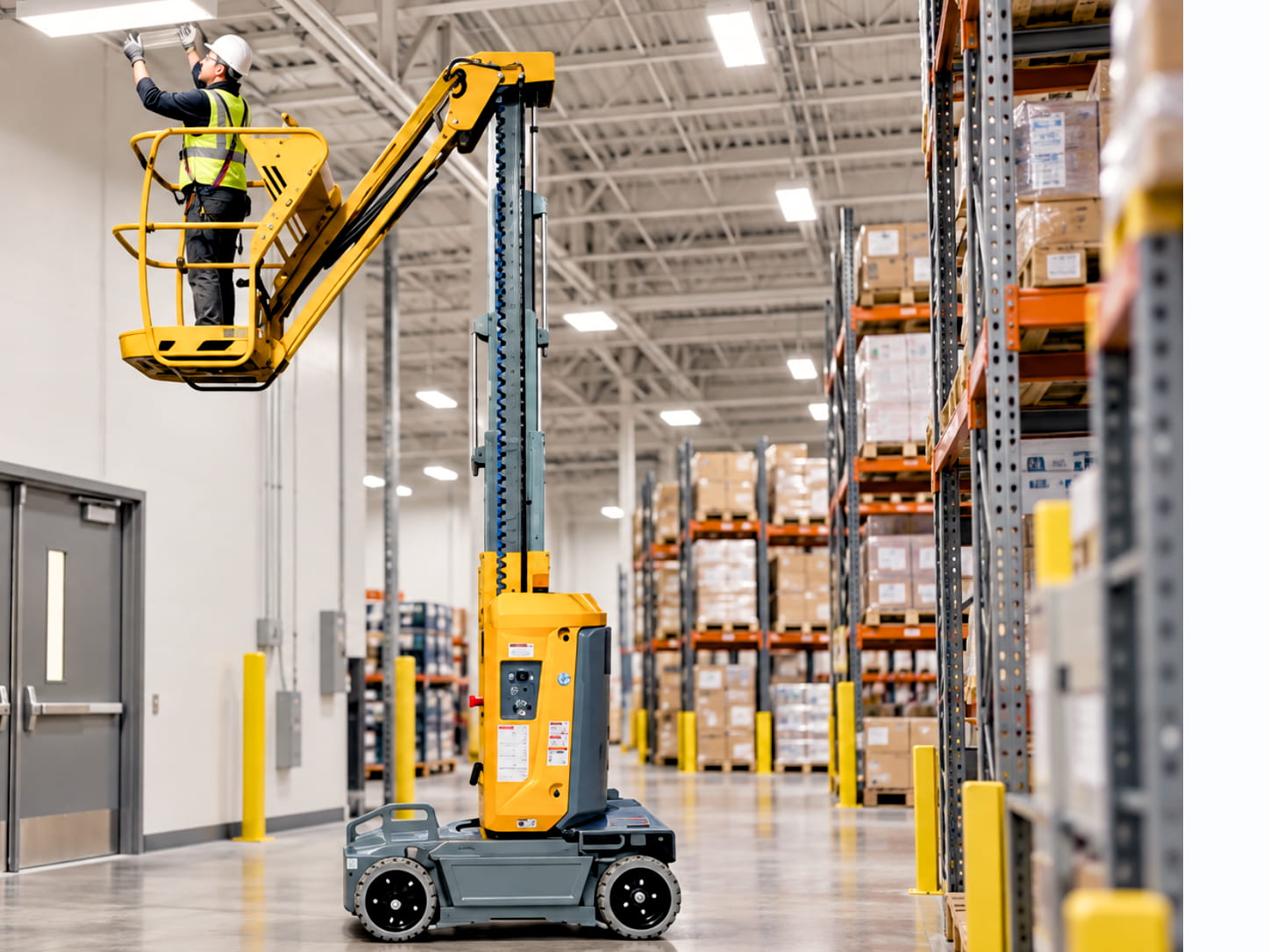 You may find that a scissor lift may be too large for your commercial space and this is where a vertical lift rental may be able to provide the required height with a smaller machine footprint.
The compact dimensions of a vertical lift don’t eliminate the need to measure so remember to still confirm the unit’s width, stowed height and weight to determine if there’s enough room to enter the platform and position the machine safely once it reaches the work area.
Confirm the Floor’s Weight Capacity
Aerial lifts are much heavier than their appearance suggests. They’re meant to carry generally heavy loads while remaining 100% stable on the ground they’re set upon.
The total machine weight is concentrated to the tires which matter most when the machine is stationed on finished flooring, suspended slabs, raised floors and other surfaces with potential load limitations. The flooring may also require protection against marking or weight damage.
To confirm the floor’s weight capacity, ask the building owner or site supervisor to confirm that the access route and the work area can actually support the selected machine’s weight and for indoor work, discuss non-marking tires and any required floor-protection measures that may be needed with the lift rental company beforehand.
Measure the Final Working Position
Once you’ve determined the lift can reach the work area, you still need to measure if it has sufficient room to operate. At the work site, measure the available floor space and note anything that will be between the machine and the work including shelving, production equipment, counters, landscaping or any building projections.
 If there’s an obstacle that prevents direct positioning, provide this information to the rental company. The rental company will need to know both the required working height and the distance the platform must reach across or around an obstruction before a decision can be made as to the right equipment.
Account for Changes Before Delivery Day
Before the delivery date, recheck the planned route, particularly if several days have passed since the original measurements were taken and the machine was scheduled to arrive.
Keep the route clear until the lift is in position and remember that it will have to leave using the same route.
Refrain from blocking the exit route with newly installed equipment, completed walls or other stored materials which can all create costly problems during pickup.